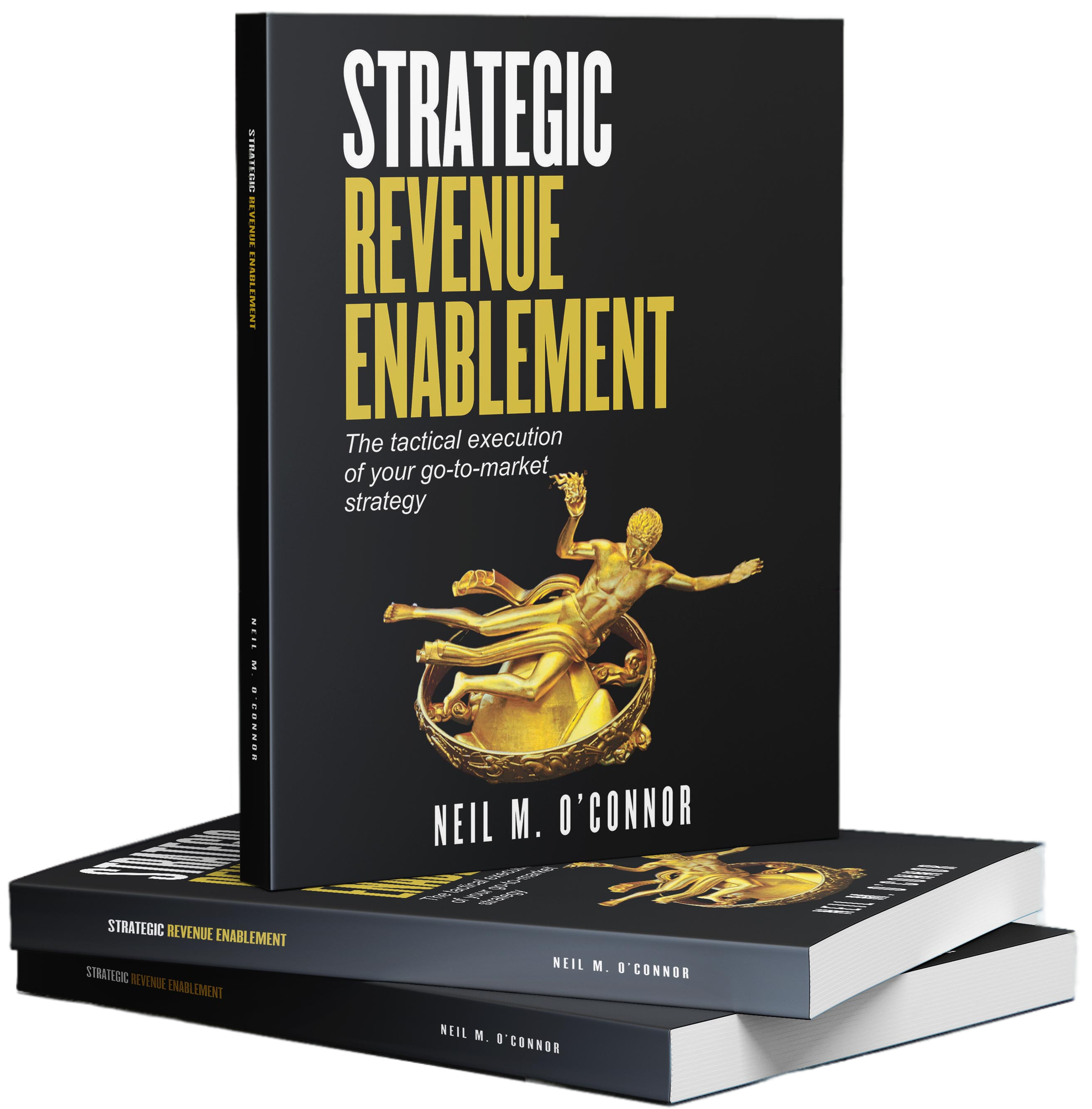
My book aims to expand on this definition and highlight specific areas in the practice that need to be described, prescribed, and taught how.
The book unveils a groundbreaking approach to revitalize struggling Go-To-Market (GTM) strategies. At the heart of this transformative process lies the concept of Revenue Enablement, a strategic framework that integrates customer-centric tactics, organizational alignment, and innovative methodologies to drive sales effectiveness.
The narrative begins with an exploration of traditional GTM strategies, emphasizing their reliance on customer-centricity and the common pitfalls encountered during execution. Despite best efforts, these tactics often fall short of expectations, hindered by organizational silos and internal resistance that impede productivity and inhibit growth.
Enter the concept of Go-To-Customer (GTC), a revolutionary tactical execution that reframes the role of revenue enablement within the organization. By prioritizing collaboration and breaking down silos, GTC fosters a culture of innovation and agility essential for navigating today’s complex marketplace.
Through the lens of Complexity Theory, the book elucidates how organizational behavior problems, such as sales prevention and reduced productivity, can be effectively addressed. By understanding the underlying dynamics of these issues, companies can implement strategic interventions to drive positive change and enhance sales performance.
Central to the Revenue Enablement framework is the concept of Internal Consulting, which empowers organizations to uncover latent projects and opportunities for sales improvement. Leveraging Salespeople Analytics, teams can identify root causes of sales challenges and tailor training and development initiatives to address specific competency gaps.
The narrative unfolds as readers are guided through the intricate process of Revenue Enablement implementation, from building cross-functional teams to developing comprehensive training programs. Through Adult Learning principles and experiential training methods, sales teams are equipped with the knowledge and skills needed to communicate value propositions and drive customer engagement effectively.
Key components such as sales messaging, digital playbooks, and performance coaching are explored in detail, offering practical strategies for reinforcing training initiatives and optimizing sales performance. Through continuous measurement and refinement, organizations can align hiring practices with data-driven insights, ensuring a sustainable and adaptive approach to revenue generation.
Drawing upon real-world examples and expert insights, “Strategic Revenue Enablement: The tactical execution of your go to market strategy” serves as a definitive guide for organizations seeking to unlock their full sales potential. With its comprehensive approach and actionable strategies, this book is essential reading for sales leaders, executives, and anyone committed to driving lasting change and maximizing revenue growth.